.png)




.png)

Building a home is one of the biggest financial investments you’ll ever make, and every decision impacts your budget. While it can be tempting to look for savings, your plumbing is one area where cutting corners can lead to disastrous consequences down the road. A poorly installed pipe or an incorrect drain slope can cause leaks, water damage, and costly repairs that far outweigh any initial savings. This guide breaks down the essentials of new construction plumbing to help you make smart, informed decisions. We’ll cover everything from material choices to hiring the right professional, ensuring your investment is protected from the ground up.
Key Takeaways
- Understand the Three-Phase Process: New construction plumbing is installed in three key stages: the underground rough-in, the above-ground rough-in, and the final fixture installation. Knowing this sequence helps you follow your project's progress and appreciate the importance of getting the foundational work right.
- Invest in Quality Materials: The pipes and fixtures you choose are a long-term investment in your home's health. Opting for durable, reliable materials and well-regarded brands from the start is the best way to ensure your system functions properly and prevents costly repairs down the road.
- Hire a Licensed and Local Professional: Your project's success hinges on the expertise of your plumber. Always choose a licensed, insured professional with experience in your area to ensure the work is code-compliant, passes all inspections, and is built to last.
What Are the Stages of New Construction Plumbing?
Building a new home is an exciting process, and the plumbing is one of its most critical components. Unlike a simple repair, new construction plumbing is installed in carefully planned phases that align with your home’s overall construction schedule. From the pipes hidden beneath your foundation to the shiny new faucets in your kitchen, each step is essential for a reliable and long-lasting system. Understanding these stages helps you follow the progress of your build and ensures everything is installed correctly from the start, giving you peace of mind for years to come.
The entire process is generally broken down into three main stages: the underground rough-in, the above-ground rough-in (or top-out), and the final finish. Each phase requires precise work and coordination with other trades on the job site, like the foundation crew and the framers. A professional plumber ensures that every pipe, drain, and vent is perfectly placed before the walls and floors go in, setting your home up for success. This foundational work is key to preventing future leaks, clogs, and other plumbing headaches that can be costly and disruptive down the road. When you need an expert team for your project, our new construction services cover every stage with the precision and care your new home deserves.
Stage 1: The Underground Rough-In
This is the very first step in your home’s plumbing journey, and it happens before the concrete foundation is even poured. During the underground rough-in, your plumbing team lays the groundwork for your entire system. They will dig trenches and install all the pipes for your drains and water lines that will run beneath the ground. This includes the main sewer or septic line connection and the water supply lines that will eventually feed your entire house. Getting this stage right is so important because these pipes will be buried under your foundation, making them difficult and expensive to access later.
Stage 2: The Above-Ground Rough-In (Top-Out)
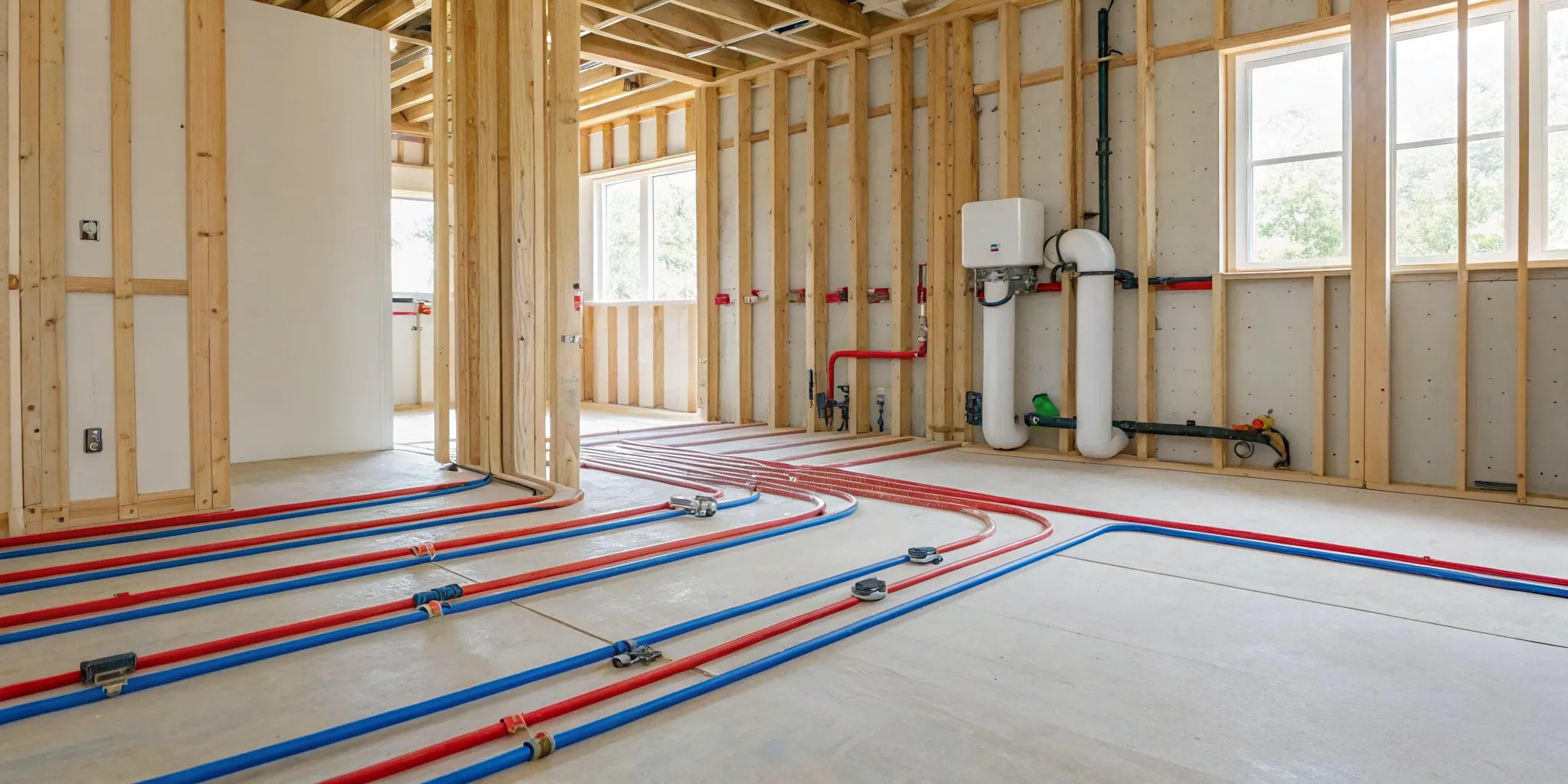
Once the foundation is poured and the house framing is complete, it’s time for the above-ground rough-in. You’ll see your plumbing system start to take shape during this phase, as plumbers install all the pipes that run through your walls and ceilings. This includes the drain, water, and vent lines for every sink, toilet, shower, and appliance in your home. The vent pipes are especially important, as they allow air into the system to ensure water drains quickly and prevent sewer gases from entering your home. This work is done before the drywall is installed, making it the last chance to get the hidden plumbing just right.
Stage 3: The Finish and Fixture Installation
The final stage is the one where you see everything come together. After the walls are painted and the flooring is installed, the plumbers return for the finish work. This is when they install all of your beautiful new fixtures, including sinks, faucets, toilets, showerheads, and the water heater. They connect all the appliances like your dishwasher and washing machine, making sure everything is sealed, secure, and working perfectly. Once this stage is complete, your plumbing system is fully operational and ready for you to turn on the tap for the first time.
What Are the Best Materials for New Plumbing?
Choosing the right materials for your new plumbing system is one of the most important decisions you'll make during construction. The pipes hidden behind your walls are the arteries and veins of your home, and their quality determines the long-term health of your entire system. The best material depends on the pipe's job, whether it's supplying clean water or carrying waste away. Your budget and local building codes also play a big role. Let's break down the most common options so you can have a confident conversation with your plumbing professional.
PEX and Copper for Water Supply Lines
When it comes to the pipes that deliver clean water to your faucets and fixtures, the two main players are copper and PEX. Copper has been the standard for decades because it’s incredibly durable, corrosion-resistant, and safe for both hot and cold water. It’s a reliable, long-lasting choice that has stood the test of time.
However, PEX (cross-linked polyethylene) is quickly becoming the preferred material in modern construction. This flexible plastic tubing is less expensive than copper and much easier to install. Its flexibility means it can bend around corners, requiring fewer fittings and reducing the potential for leaks. For many projects, PEX offers a fantastic combination of reliability and cost-effectiveness, making it a popular replacement for copper pipes.
PVC, CPVC, and Cast Iron for Drain and Vent Pipes
The pipes that carry wastewater away from your home, known as the drain-waste-vent (DWV) system, use different materials. The most common is PVC (polyvinyl chloride). You’ll recognize it as the white plastic pipe used for sink drains and toilets. It’s lightweight, affordable, and simple to work with.
For drain lines that handle hot water, like those from a dishwasher or washing machine, CPVC (chlorinated polyvinyl chloride) is a better choice because it can withstand higher temperatures. For ultimate durability and quiet operation, there’s cast iron. It’s heavy, strong, and excellent at muffling the sound of running water, which is why it’s still used for drainage in multi-story buildings.
How to Choose Materials for Your Project
Ultimately, there isn't one single "best" material for every situation. The right choice depends on your home’s specific needs, your budget, and local building codes. This is where a professional plumber’s guidance is invaluable. They can assess your project and recommend the ideal materials for a durable, efficient system. Investing in high-quality pipes and fittings from the start is the best way to ensure your plumbing remains trouble-free for years to come. A well-planned layout can also help manage costs, no matter which materials you choose.
How Much Does New Construction Plumbing Cost?
Budgeting for a new home can feel overwhelming, but breaking down the plumbing costs makes it more manageable. Plumbing is one of the most critical systems in your house, and it's a significant part of your construction budget. While there's no single price tag, understanding the key components of the cost will help you plan effectively and make informed decisions. The total expense depends on the size of your home, the materials you choose, and the complexity of the layout. Let's look at how these costs are calculated so you can approach your project with confidence.
Estimating Costs Per Square Foot
A common way to get a ballpark figure for plumbing is to look at the cost per square foot. For new residential construction, you can generally expect the plumbing cost to fall between $4 and $10 per square foot. For a 2,000-square-foot home, that means a range of $8,000 to $20,000. This estimate typically covers the rough-in plumbing, which includes installing all the pipes, drains, and vents within the walls. Keep in mind this is a starting point. The final number can shift based on the number of bathrooms, kitchen features, and any specialty fixtures like a wet bar or laundry room sink.
What Affects Your Total Plumbing Budget?
Several key factors will influence your final plumbing bill. The size and layout of your home are the biggest drivers; a larger house with multiple bathrooms on different floors will naturally cost more than a simple, one-story layout. The types of pipes you choose also play a major role. PEX is a flexible and affordable modern option, while copper is more traditional and durable but comes with a higher price tag. Finally, the number and quality of your fixtures, from faucets and sinks to toilets and tubs, will add to the total. Each of these choices contributes to the overall budget for your project.
Material vs. Labor Expenses
When you receive a plumbing quote, you'll see it's primarily split between materials and labor, and it’s important to understand both. Labor often accounts for half or even more of the total project cost. This is because proper installation requires skill, precision, and expertise to ensure your system is leak-free and up to code. You can expect to pay between $250 and $500 per fixture connection for installation. While it might be tempting to cut corners on labor, investing in a professional, licensed plumber protects your home from costly water damage down the road. For a clear picture of your project's costs, it's always best to get a detailed estimate from an experienced team.
Top Plumbing Fixture Brands for Your New Home
This is the fun part—picking out the faucets, sinks, and toilets that will define your home's style. The brand you choose matters for both looks and long-term performance. When you're building a new home, you want fixtures that will not only look great on day one but also stand up to daily use for years to come. Here are five top brands that consistently deliver quality and reliability, making them excellent choices for new construction projects.
Kohler
Kohler is a go-to for homeowners who want fixtures that are both beautiful and smart. They are well-known for their innovative designs and high-quality construction, making them a top choice for enhancing kitchens and bathrooms. Whether you're looking for a sleek, modern faucet or a classic, elegant sink, Kohler products often include advanced technology that adds convenience to your daily routines. They offer a great balance of sophisticated style and practical function.
Moen
When you think of durability, Moen often comes to mind. They build faucets and fixtures that are made to last, which is exactly what you want in a new home. Moen offers a huge selection of styles, so you can find the perfect match for your decor, from contemporary to traditional. Their commitment to quality means you can count on their products to perform reliably for years, giving you peace of mind and a beautiful finish in your new space.
Delta
Delta has earned its reputation as a leader in the plumbing industry by focusing on smart, user-friendly innovations. Their fixtures are designed to make your life easier, with features that ensure long-lasting, dependable performance. If you're looking for a brand that combines practical technology with reliability, Delta is an excellent choice for any new build. Their products are thoughtfully engineered to handle the demands of a busy household while maintaining their performance and appearance.
American Standard
Just like the name suggests, American Standard sets a high bar for quality and performance. They offer a massive variety of plumbing fixtures, making it easy to find products that fit your budget and style. This brand is a popular choice for new construction because their fixtures successfully combine style with functionality. You can trust their products to work well and look great in your new home, providing dependable performance from day one.
Toto
Toto is especially famous for its high-performance toilets, but they offer a complete collection of top-tier bathroom fixtures. Renowned for their quality and innovation, Toto products often feature advanced technology designed to improve hygiene and the user experience. If you want to create a modern, efficient, and comfortable bathroom, exploring Toto's range of toilets, faucets, and sinks is a great place to start. They are a fantastic choice for adding a touch of luxury and superior function to your new home.
Common Problems in New Construction Plumbing
Building a new home is an incredible journey, but it’s important to remember that "new" doesn't always mean "perfect." Some of the most frustrating issues homeowners face stem from plumbing that wasn't installed correctly from the start. These problems can stay hidden behind walls for months or even years, only revealing themselves after you’ve settled in. Cutting corners during the construction phase might seem like a way to manage the budget, but it often leads to more expensive and disruptive repairs down the road.
The key to a reliable plumbing system is getting it right the first time. This means paying close attention to the design, materials, and installation quality. A skilled plumbing professional understands how to prevent common pitfalls that can lead to leaks, clogs, and pressure problems. By being aware of these potential issues, you can ask the right questions and ensure your builder is partnering with a reputable plumbing contractor. Let’s look at a few of the most frequent problems we see in new construction plumbing.
Improper Drainage and Venting
Your home’s plumbing system does more than just bring in fresh water; it also needs to safely and efficiently remove wastewater. This requires a well-designed network of drain and vent pipes. Drains carry waste away, while plumbing vents regulate air pressure to help water flow smoothly. When this system is installed incorrectly, you’ll notice the signs: gurgling toilets, slow-draining sinks, and unpleasant sewer gas smells in your home. Many of these issues are preventable, but they often arise from poor planning, like installing fixtures without proper access to shutoff valves or failing to include enough cleanouts for future maintenance.
Incorrect Pipe Sizing and Water Pressure
The diameter of your water supply pipes has a direct impact on your daily comfort. If the pipes are too small, they can’t deliver enough water to your fixtures, resulting in weak showers and slow-filling tubs. If they’re too large, the water velocity can drop, which may prevent the pipes from clearing away sediment and debris effectively. An experienced plumber carefully calculates the right pipe sizes based on your home’s layout and expected water usage. Getting this wrong is a massive headache to fix once the drywall is up, so it’s critical to ensure your plumbing plan is designed for maintaining proper water flow from the very beginning.
Overlooking Local Building Codes
Plumbing work isn’t just a matter of connecting pipes; it’s governed by a strict set of rules and regulations. These local building codes exist to protect your health and safety, ensuring that your drinking water is clean and your waste is disposed of properly. A professional team designs plumbing systems to meet all functional and regulatory requirements, preventing serious issues like cross-contamination or gas leaks. Failing a plumbing inspection due to code violations can halt your entire construction project, causing costly delays. That’s why it’s so important to work with a licensed plumber who has deep experience with the specific codes in your area, from Delta to Mesa County.
Permits and Inspections: What to Expect
Navigating the world of permits and inspections might seem like a hassle, but it’s one of the most important parts of your new construction project. Think of it as a built-in quality control system that protects your investment and ensures your home’s plumbing is safe, reliable, and built to last. When you work with a professional team, this process is straightforward and seamless. We handle the paperwork and scheduling so you can focus on the exciting parts of building your new home. Understanding what’s involved will give you peace of mind, knowing that every pipe and fixture is installed correctly and up to the highest standards.
Why Are Plumbing Permits Required?
Plumbing permits are your assurance that the job is done right. They are required by local authorities to ensure all plumbing work meets specific safety and structural standards. Essentially, a permit triggers a review process by a qualified inspector who verifies that the installation complies with local building codes. This step is crucial for preventing serious issues down the road, such as leaks, water damage, or improper drainage, which can lead to expensive repairs and potential health hazards. A permit isn’t just red tape; it’s a formal record that your plumbing system was installed correctly, which is important for your home’s safety, insurance, and future resale value.
Working with Inspectors and Other Trades
A new construction site is a busy place with many different professionals working together. Your plumbing installation doesn’t happen in isolation. We coordinate closely with building inspectors to schedule reviews at key stages, like the underground and above-ground rough-ins, to get their approval before any pipes are covered up. At the same time, we collaborate with other trades, such as electricians and HVAC technicians, to ensure a smooth integration of all your home’s systems. Careful planning prevents conflicts, like a drainpipe running where ductwork needs to go. This teamwork is essential for keeping your project on schedule and ensuring all HVAC and plumbing services work together perfectly.
Keep Your Project Code-Compliant
Staying compliant with local codes is non-negotiable, and it’s a core part of any professional plumber’s job. These regulations dictate everything from the types of materials we can use to the exact methods for installation, venting, and drainage. Following these rules ensures your system functions properly and safely for years to come. Failing to meet code can result in failed inspections, which lead to project delays, fines, and the costly process of redoing the work. By hiring an experienced, licensed plumber who is an expert in local requirements, you can rest easy knowing your project will adhere to the current International Plumbing Code and any specific amendments for your county.
How to Choose the Right Plumbing Professional
Selecting the right plumber for your new construction project is one of the most important decisions you’ll make. This isn’t just about connecting pipes; it’s about finding a skilled partner who will ensure the long-term health and safety of your home’s plumbing system. The right professional brings not only technical skill but also peace of mind. When you’re vetting potential plumbers, you’re looking for a combination of proper credentials, relevant experience, and a deep understanding of local requirements. Taking the time to find a qualified expert prevents costly mistakes and ensures your plumbing is built to last from day one. Think of it as building a foundation of trust before the actual foundation is even poured.
Why You Need a Licensed and Insured Plumber
First things first: never hire a plumber who isn’t licensed and insured. A license is your proof that the plumber has met the state’s requirements for knowledge and competency. It shows they understand the complexities of plumbing systems and are up-to-date on current building codes, which is essential for passing inspections and preventing future problems. You can easily verify a plumber’s license online.
Insurance is just as critical. General liability insurance protects your property from accidental damage, while workers' compensation covers the plumber if they get injured on the job. Without proper insurance, you could be held financially responsible for accidents. Hiring a licensed and insured professional is the baseline for protecting your investment and ensuring the work is done correctly and safely.
Questions to Ask Your Plumbing Contractor
Before you commit, it’s smart to have a conversation with any potential plumbing contractor. This helps you gauge their experience and professionalism. Think of it as a casual interview to make sure they’re the right fit for your project.
Here are a few key questions to ask:
- Can you provide references from recent new construction projects similar to mine?
- What types of materials do you recommend for my water and drain lines, and why?
- How do you handle the permitting and inspection process with the local authorities?
- What does your warranty or guarantee cover once the work is complete?
Their answers will give you a clear picture of their expertise, communication style, and commitment to quality.
Check for Local Experience and Expertise
A plumber with experience in your specific area offers a huge advantage. Local professionals are familiar with the regional building codes, permit processes, and environmental factors that can impact a plumbing system. For example, a plumber working on the Western Slope understands the unique soil conditions and water quality challenges that might not be a factor elsewhere. This local knowledge helps them anticipate potential issues and design a system that’s perfectly suited for your home. They also have established relationships with local suppliers and inspectors, which can help your project run more smoothly and stay on schedule. Choosing a plumber with a strong local reputation is a great way to ensure your project is in capable hands.
How to Future-Proof Your New Plumbing System
Building a new home gives you the unique opportunity to plan for the future. When it comes to your plumbing, making thoughtful decisions during construction can prevent major headaches and expenses years from now. Future-proofing is all about anticipating your needs, choosing materials that last, and incorporating modern technology. A well-planned system not only functions better but also adds long-term value to your property. By thinking ahead, you can ensure your plumbing supports your lifestyle for decades, whether you plan to finish a basement, add an outdoor kitchen, or simply want a more efficient home.
Prepare for Future Additions and Renovations
Think about how you might use your space in five or ten years. Do you dream of adding a bathroom in the basement, a utility sink in the garage, or a wet bar on the patio? It’s far easier and more affordable to have your plumber install the basic framework for these additions now. Running "stub-outs" for water supply and drain lines to unfinished areas prepares your home for future projects without requiring you to tear open walls later. When you hire a plumbing professional, discuss your long-term vision for the property so they can help you map out a system that grows with you.
Choose Durable, Long-Lasting Fixtures
While it can be tempting to choose less expensive materials to manage your initial budget, your plumbing is one area where quality truly matters. Opting for durable pipes and fittings is a critical investment in your home’s longevity. Materials like copper and PEX are excellent, long-lasting choices for water supply lines, while PVC is a reliable standard for drain pipes. Higher-quality fixtures are also less prone to leaks and failures, protecting your home from water damage. Investing in dependable materials from the start gives you peace of mind and a more resilient plumbing system.
Explore Water-Efficient Technology
Modern plumbing offers more than just basic function; it can also make your home more efficient. Installing water-efficient fixtures is a simple way to reduce your utility bills and your environmental footprint from day one. Look for toilets, showerheads, and faucets with the EPA WaterSense label, which certifies that they use at least 20% less water than standard models without sacrificing performance. These fixtures help conserve a vital resource and contribute to a smarter, more sustainable home. A plumbing expert can recommend the best water-efficient options that fit your home’s design and your family’s needs.
Related Articles
- Plumbing Services | Cooleys Heating, Cooling & Plumbing
- Plumbing Repair Delta County | Fast Leak & Drain Fix | Cooleys
Frequently Asked Questions
How long does each stage of the plumbing installation take? The timeline for new construction plumbing can vary quite a bit depending on the size of your home and how well the work is coordinated with other trades on site. Generally, the underground rough-in is completed in just a few days before the foundation is poured. The above-ground rough-in is the longest phase, often taking a week or more, as it involves running all the pipes through the framing. The final finish stage is usually the quickest, completed in a couple of days after the drywall and paint are done.
Can I supply my own faucets and fixtures for the plumber to install? Yes, you can often purchase your own fixtures, but it's essential to discuss this with your plumbing contractor ahead of time. They can provide specifications to ensure the fixtures you choose are compatible with the rough-in plumbing they've installed. Keep in mind that if you supply the materials, the plumber's warranty may only cover their labor, not a defect in the fixture itself. It's always a good idea to choose reputable brands to avoid issues.
What is the single most important thing to get right during the rough-in phase? If I had to pick one thing, it would be the design of the drain-waste-vent (DWV) system. This is the network of pipes that carries wastewater away and allows air into the system so it drains properly. An incorrectly sloped drain or a poorly placed vent can cause slow drains, gurgling sounds, and sewer gas odors for years to come. Since these pipes are hidden behind walls and under floors, fixing them later is a massive and expensive job.
Why can't I just use the cheapest materials to keep my budget down? While it's tempting to look for ways to reduce costs, your home's plumbing is not the place to do it. The pipes inside your walls are the arteries of your house, and using low-quality materials can lead to premature corrosion, cracks, and leaks. A small leak behind a wall can cause thousands of dollars in water damage and mold remediation. Investing in durable pipes and fittings from the start is one of the smartest financial decisions you can make for the long-term health of your home.
How can I be sure my plumbing is installed correctly if it's all hidden behind walls? This is exactly why the permit and inspection process is so valuable. A licensed city or county inspector will personally review the plumbing at both the underground and above-ground rough-in stages before anything is covered up. This provides an expert, third-party verification that the work meets all safety and building codes. This process, combined with hiring a licensed and insured professional with a strong local reputation, is your best assurance that the job was done right.